

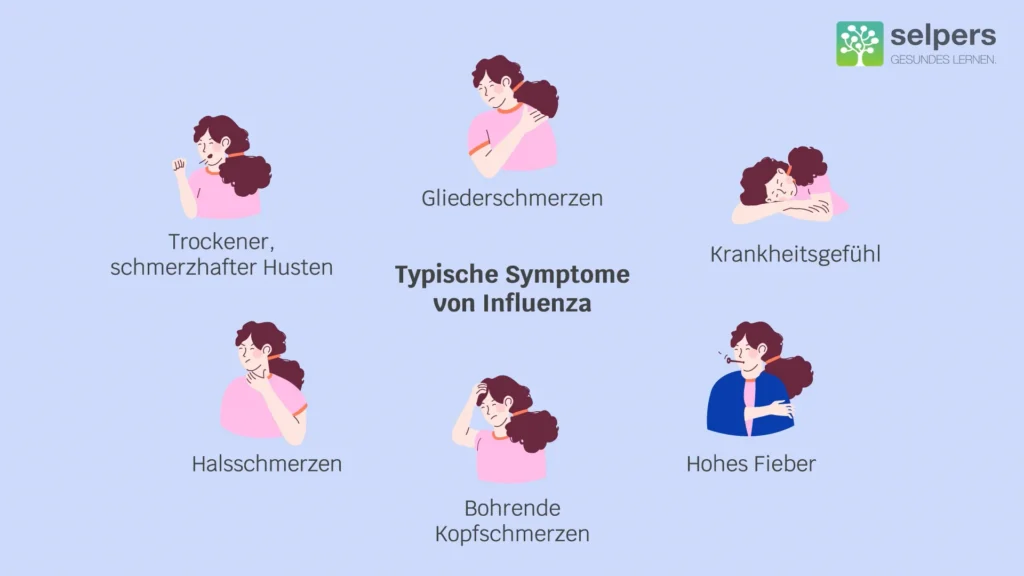
Seasonal influenza, commonly known as the flu, is an infectious disease that occurs worldwide and, here in particular, during the winter months (January to March). Influenza viruses are mainly spread through droplets produced when coughing, sneezing or speaking. Smear infections, e.g. the transmission of the influenza virus from surfaces to the hands and subsequently holding the hand in front of the mouth when coughing or sneezing, are also possible. The virus’s incubation period can last up to 2 days. This means that people can be infectious for up to 2 days before symptoms appear. Characteristic symptoms are sudden onset with a high fever, chills, coughing or sore throat, headache and aching limbs, and a subjective feeling of illness. The illness lasts approximately 5–7 days.
To reduce the risk of infection, it is important to wash your hands regularly with soap and to cough or sneeze into the crook of your elbow.
Flu vaccination is recommended for people aged 65 and over, people with chronic illnesses or an immunodeficiency, and pregnant women.